
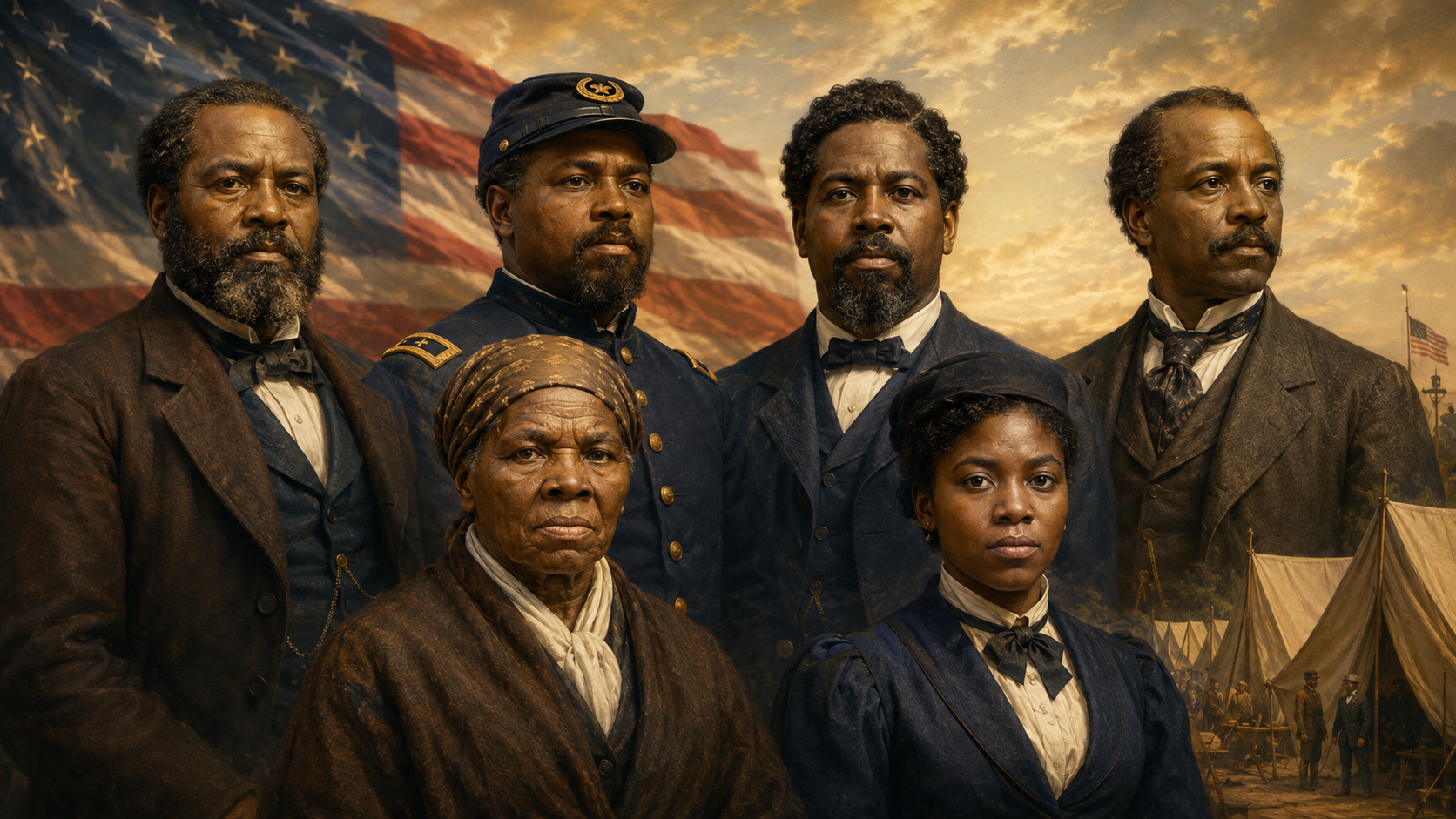
The United Sons & Daughters of Freedmen honor our Freedmen Patriot Saints who fought valiantly for this country and displayed extraordinary courage in the struggle to preserve the Union and destroy slavery. Some carried rifles or regimental colors into battle. Others commanded troops, piloted vessels, treated the wounded, gathered intelligence, taught soldiers, or helped people escape into Union lines. We honor not only their service, but the larger truth their lives reveal: American Freedmen were active agents in securing emancipation and preserving the United States.
Moses Dickson
1824 – 1901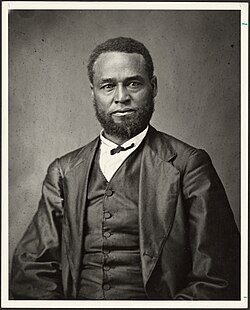
Moses Dickson was an abolitionist, soldier, minister, and founder of possibly the first independent Freedmen Secret Society in the United States. Dickson would form the Knights of Liberty, an anti-slavery organization that planned a slave uprising in the United States. The Knights of Liberty were also instrumental in helping enslaved people reach freedom through the Underground Railroad. Dickson reported that the network grew to include more than 40,000 enslaved and free Black men who drilled and prepared for a coordinated uprising; according to his later account, many eventually served the Union during the Civil War. He also founded a Freedmen self-help organization, The International Order of Twelve Knights and Daughters of Tabor, and was a co-founder of Lincoln University in Missouri.
Prince Rivers
1824 – 1887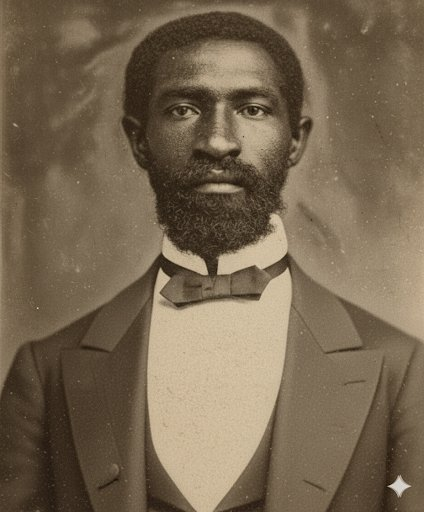
Prince Rivers is arguably one of the greatest Freedmen to ever live. Prince R. Rivers was a Freedman, once enslaved in South Carolina, who served as a soldier in the Union Army and as a state politician during the Reconstruction era. He escaped from slavery and joined Union lines, becoming a sergeant in the 1st South Carolina Volunteers, a Union regiment in the American Civil War. He had gained literacy as an enslaved man and after the war joined the Republican Party. He served as a delegate to the 1868 South Carolina Constitutional Convention, becoming known as an orator. He was one of three American Freedmen founders of Aiken County, SC in 1871, helped pick the site for the courthouse, and served as the state legislator from the county through 1874.
Colonel Thomas Wentworth Higginson, a Boston abolitionist, chose Rivers to head his Company A. Higginson once reported:
"There is not a white officer in this regiment who has more administrative ability, or more absolute authority over the men. They do not love him, but his mere presence has controlling power over them." — Colonel Thomas Wentworth Higginson
Higginson also described Rivers as a man of indefinable magnetism:
"He writes well enough to prepare for me a daily report of his duties in the camp; if his education reached a higher point, I see no reason why he should not command the Army of the Potomac. He is jet-black... his complexion, like that of others of my darkest men, having a sort of rich, clear depth, without a trace of sootiness, and to my eye, very handsome. His features are tolerably regular, and full of command, and his figure superior to that of any of our white officers — being six feet high, perfectly proportioned, and of apparently inexhaustible strength and activity. His gait is like a panther's; I never saw such a tread. No anti-slavery novel has described a man of such marked ability. If there would ever be a black monarchy in South Carolina, he will be its king." — Colonel Thomas Wentworth Higginson
Robert Smalls
1839 – 1915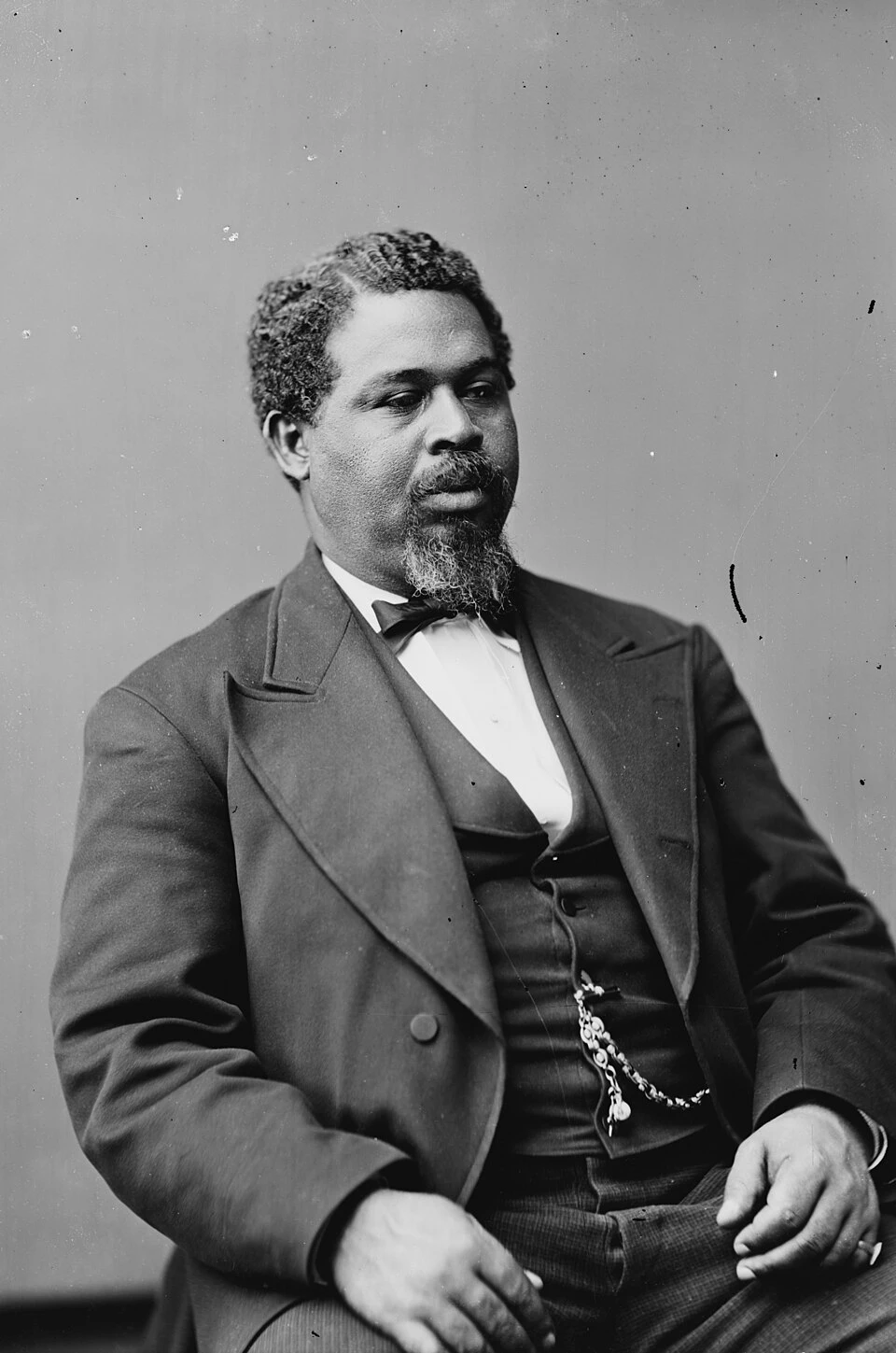
Few Freedmen have as heroic an account as Robert Smalls. His acts of bravery should be commended and canonized in memoriam.
Just before dawn on May 13, 1862, Robert Smalls and a crew composed of fellow enslaved men — in the absence of the white captain and his two mates — slipped a cotton steamer off the dock, picked up family members at a rendezvous point, then slowly navigated their way through the harbor. Smalls, doubling as the captain and even donning the captain's wide-brimmed straw hat to hide his face, responded with the proper coded signals at two Confederate checkpoints, including at Fort Sumter itself. Cleared, Smalls sailed into the open seas. Once outside Confederate waters, he had his crew raise a white flag and surrendered the ship to the blockading Union fleet.
In fewer than four hours, Robert Smalls had done something unimaginable: in the midst of the Civil War, this Black man — a slave — had commandeered a heavily armed Confederate ship and delivered its 17 Black passengers (nine men, five women, and three children) from slavery to freedom.
Martin Delany
1812 – 1885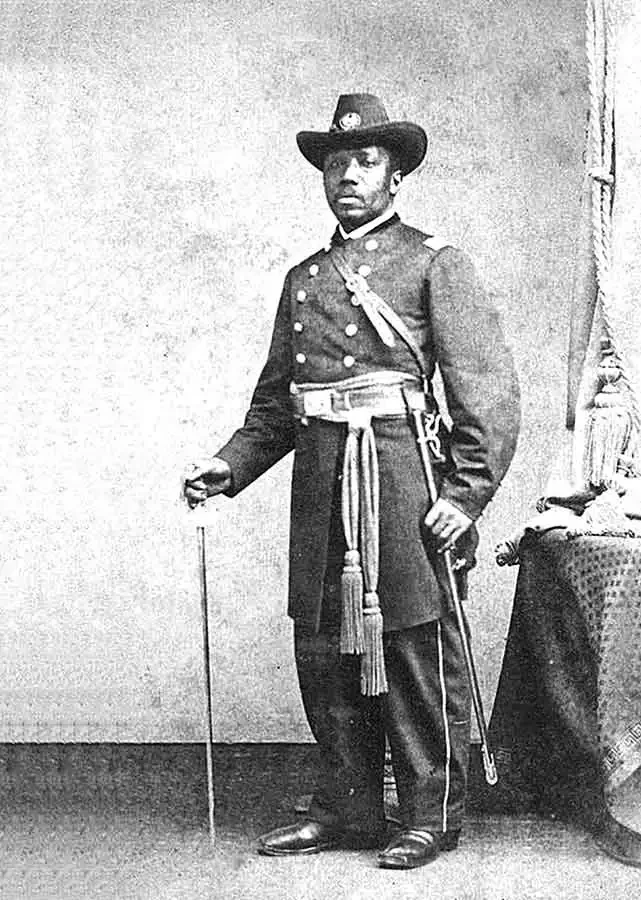
Martin Robison Delany was an abolitionist, journalist, physician, soldier, and writer — and arguably the first proponent of Black nationalism. Delany is credited with the Pan-African slogan "Africa for Africans." When the United States Colored Troops were created in 1863, he recruited for them. Commissioned as a major in February 1865, Delany became the first African-American field grade officer in the United States Army.
After the Civil War, Delany went south, settling in South Carolina, where he worked for the Freedmen's Bureau and became politically active in the Colored Conventions Movement.
William H. Carney
1840 – 1908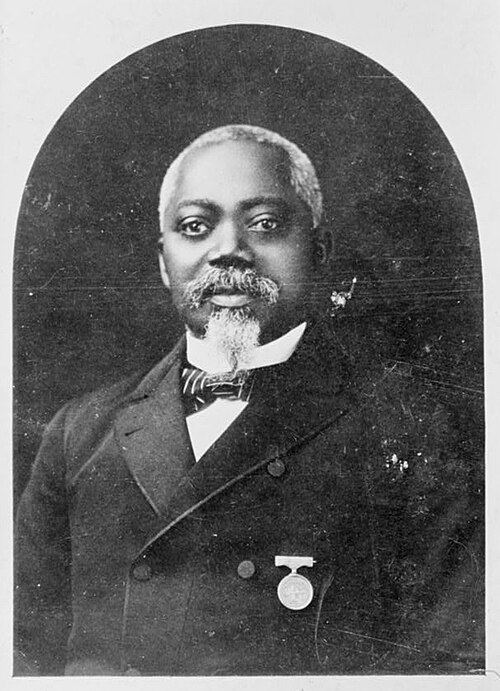
William H. Carney served as a sergeant in Company C of the 54th Massachusetts Infantry. During the assault on Fort Wagner, South Carolina, on July 18, 1863, the regiment's color bearer fell. Carney seized the United States flag, carried it to the parapet, and protected it during the regiment's retreat even after suffering multiple wounds.
Carney survived the battle and was awarded the Medal of Honor in 1900. His actions at Fort Wagner were the earliest actions by an African American to be recognized with the medal. His determination to prevent the flag from touching the ground made him one of the most enduring symbols of American Freedmen's service to the Union.
André Cailloux
1825 – 1863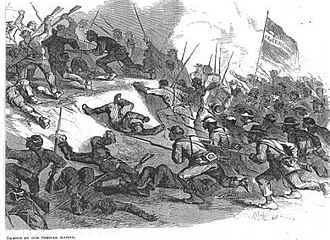
André Cailloux was born enslaved in Louisiana and later gained his freedom. During the Civil War, he became a captain in the 1st Louisiana Native Guard, one of the Union Army's earliest Black regiments. On May 27, 1863, Cailloux led his company in a difficult assault against the Confederate defenses at Port Hudson.
Cailloux continued leading his men despite intense fire and was killed during the assault. His courage received national attention, and his funeral procession in New Orleans drew an immense gathering of mourners. His death helped demonstrate publicly that Black soldiers and officers were prepared to fight and die for the destruction of slavery and preservation of the Union.
Christian A. Fleetwood
1840 – 1914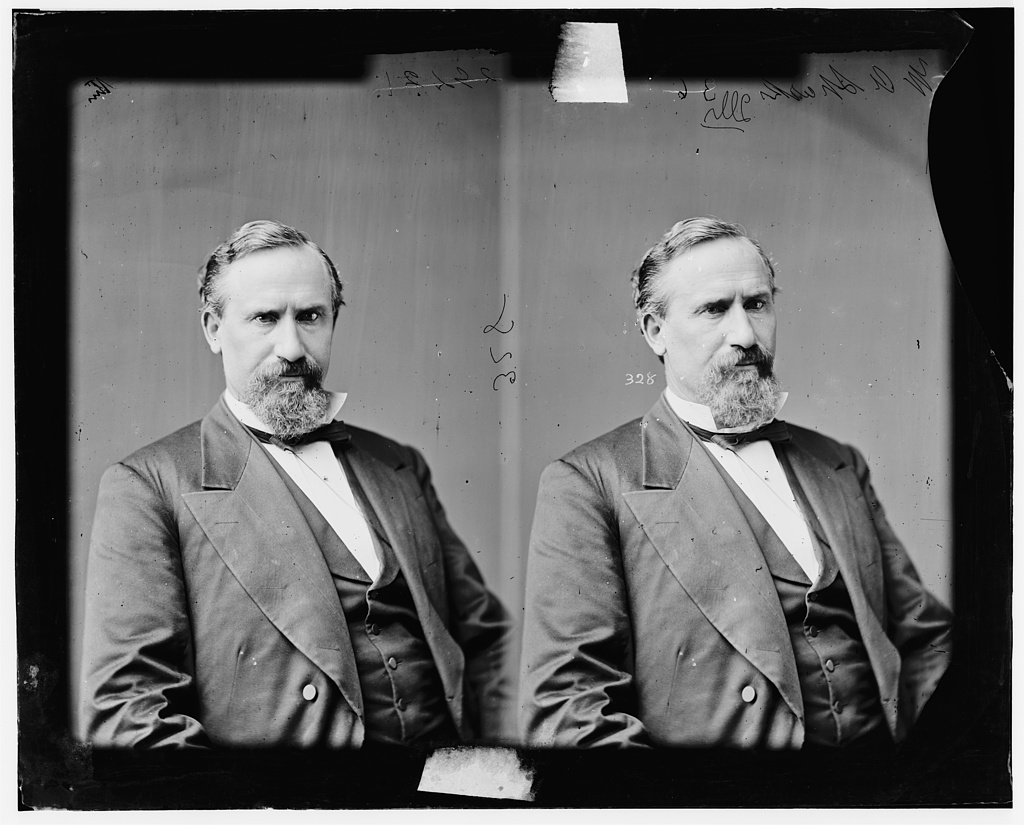
Christian A. Fleetwood served as sergeant major of the 4th United States Colored Infantry. At the Battle of New Market Heights, Virginia, on September 29, 1864, two color bearers were shot down. Fleetwood seized the flag and carried it forward through the remainder of the battle.
Fleetwood received the Medal of Honor for his actions. He was one of fourteen Black soldiers decorated for valor at New Market Heights, the largest group of African American Medal of Honor recipients recognized for a single battle.
Powhatan Beaty
1837 – 1916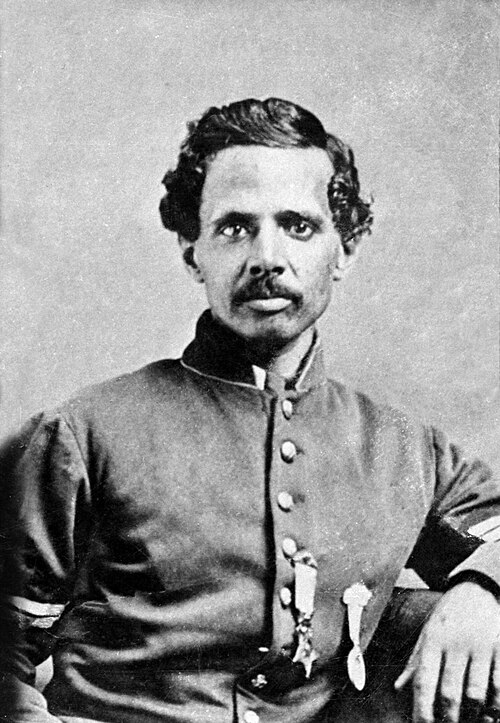
Powhatan Beaty was born enslaved in Richmond, Virginia. Around 1849, his family moved to Cincinnati, Ohio, where he gained his freedom and received an education. He later enlisted in the 5th United States Colored Infantry. At New Market Heights, every commissioned officer in Beaty's company was killed or wounded. Then serving as first sergeant, Beaty assumed command and gallantly led the company through the assault.
Beaty received the Medal of Honor for his leadership. After the war, he became a respected actor and playwright in Cincinnati, carrying the discipline and self-possession he demonstrated in battle into Black civic and cultural life.
Milton M. Holland
1844 – 1910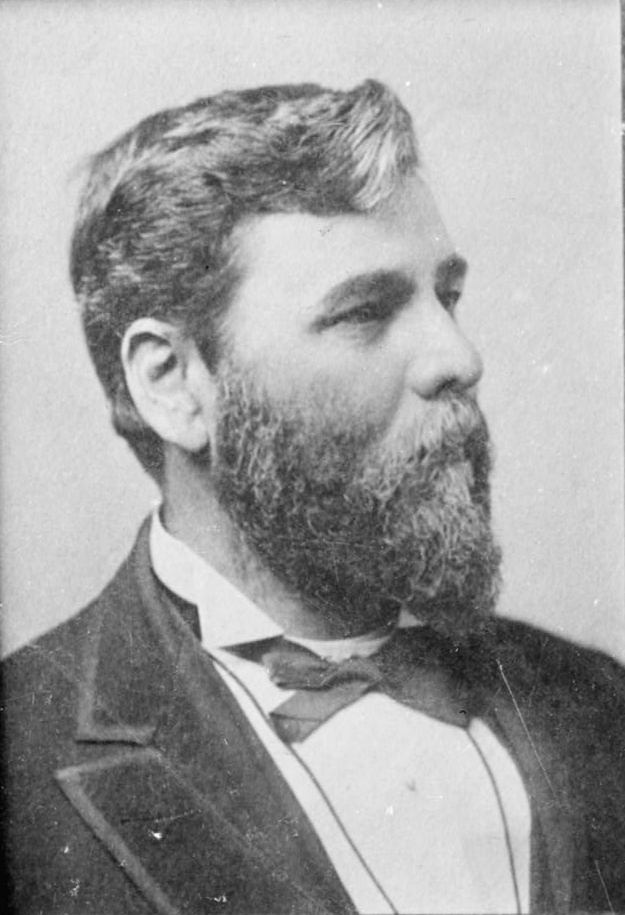
Milton M. Holland was born enslaved in Texas and later attended school in Ohio. He joined the 5th United States Colored Infantry and rose to the rank of sergeant major. During the assault at New Market Heights, Holland took command of Company C after its officers had been killed or wounded and led the men forward.
Holland received the Medal of Honor for his valor. Following the war, he became an attorney, businessman, public servant, and advocate for Black veterans, joining military courage with the institution-building work of the Reconstruction generation.
Alexander T. Augusta
1825 – 1890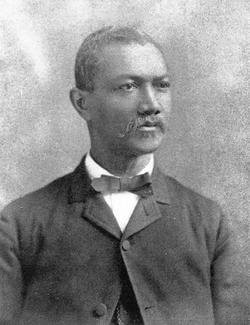
Dr. Alexander T. Augusta became the first Black physician commissioned in the United States Army. He entered the service with the rank of major, served as surgeon of the 7th United States Colored Troops, and received a brevet promotion to lieutenant colonel for faithful and meritorious service.
Augusta treated soldiers, directed military medical facilities, and later served with the Freedmen's Bureau. After the war, he taught at Howard University and became the first African American professor of medicine in the United States. His career joined military service, medical achievement, education, and the construction of Freedmen institutions.
Harriet Tubman
c. 1822 – 1913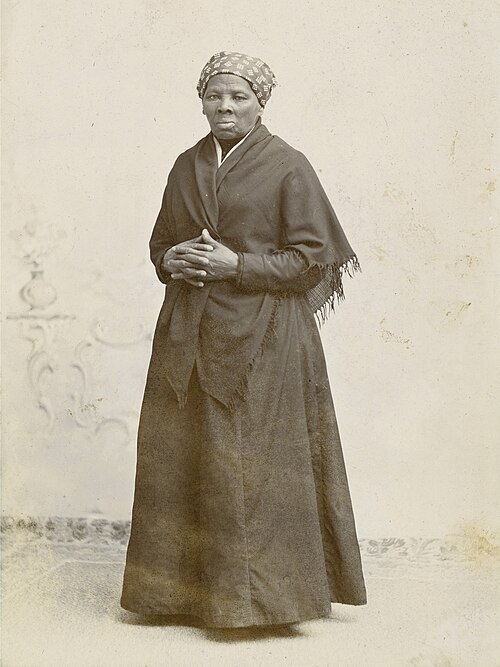
Harriet Tubman escaped slavery and repeatedly returned south to guide other enslaved people to freedom. During the Civil War, she served the Union cause as a nurse, scout, guide, and intelligence operative in coastal South Carolina.
In June 1863, Tubman accompanied and helped guide the Combahee River expedition. Union gunboats struck Confederate resources and carried more than 700 enslaved people to freedom. Tubman's knowledge, intelligence network, and direct participation made the raid one of the most extraordinary liberation operations of the war.
Susie King Taylor
1848 – 1912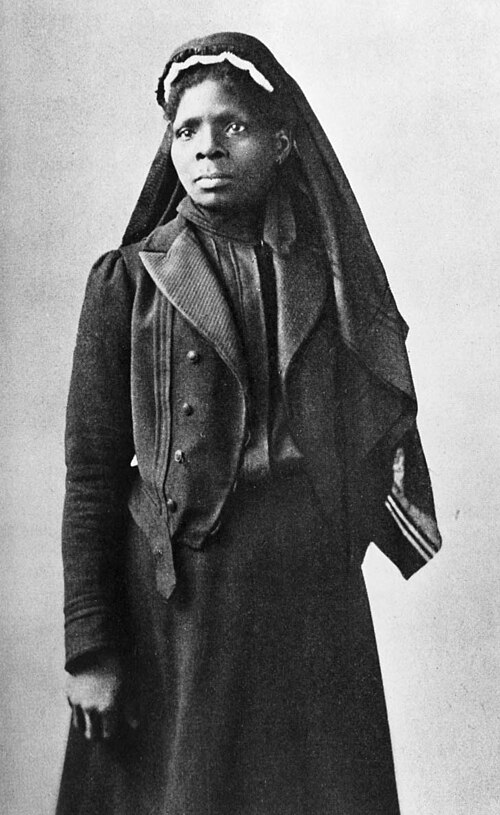
Born enslaved in Georgia, Susie King Taylor escaped to Union lines in 1862. She served with the 1st South Carolina Volunteers, later designated the 33rd United States Colored Troops, as a laundress, nurse, cook, and teacher. Having learned to read despite Georgia's restrictions on Black education, Taylor taught formerly enslaved soldiers to read and write while caring for the sick and wounded.
Taylor later published Reminiscences of My Life in Camp, the only known published Civil War memoir written by a Black woman. Her account preserved an indispensable firsthand record of American Freedmen fighting for liberation.
James H. Harris
c. 1828 – 1898James H. Harris was born enslaved in Maryland, escaped, and enlisted in the 36th United States Colored Infantry. At New Market Heights on September 29, 1864, Sergeant Harris displayed conspicuous gallantry during the assault on the Confederate position.
Harris received the Medal of Honor for his conduct. His passage from slavery into the uniform of the United States captures the revolutionary meaning of Black military service during the Civil War: the people whom the nation had held as property became armed defenders of the Republic.
Robert A. Pinn
1843 – 1911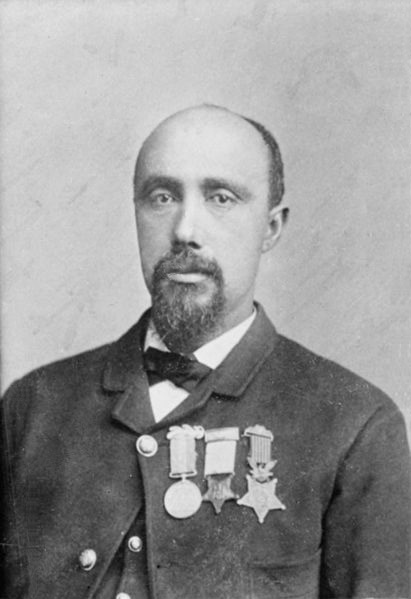
Robert A. Pinn was born in Ohio and joined the 5th United States Colored Infantry. During the Battle of New Market Heights, First Sergeant Pinn took command of his company after all of its officers had been killed or wounded and led the men in battle.
Pinn received the Medal of Honor. After the war, he studied law and became an attorney and pension agent, helping veterans secure the benefits the country owed them. His life linked battlefield leadership with the defense of Freedmen's rights after emancipation.
March Haynes
c. 1825 – 1900March Haynes was an enslaved boatman and skilled pilot who possessed intimate knowledge of the waterways surrounding Savannah and Fort Pulaski. During the Civil War, he used that knowledge to help enslaved people reach Union-held territory and assisted the United States cause in the dangerous coastal region.
Like Robert Smalls, Haynes transformed skills acquired under slavery into instruments of liberation. His story represents the many American Freedmen whose wartime service did not always fit conventional enlistment records but was essential to Union operations and the destruction of slavery.
Andrew Jackson Smith
1843 – 1932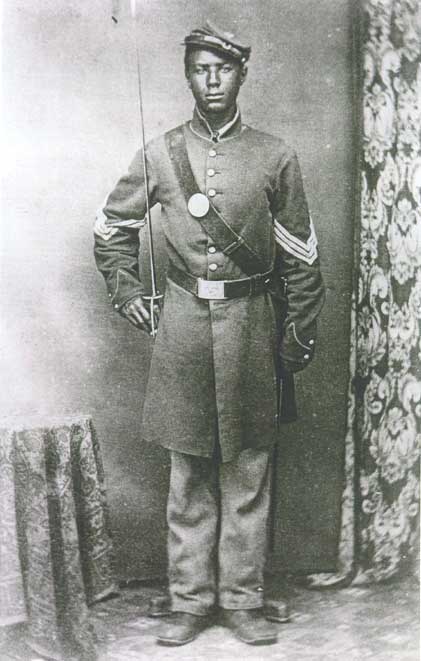
Andrew Jackson Smith was born enslaved in Kentucky and escaped to Union lines during the Civil War. He later enlisted in the 55th Massachusetts Infantry. At the Battle of Honey Hill, South Carolina, on November 30, 1864, Smith recovered the regimental colors after the color bearer was killed and carried them through heavy fire.
Smith was posthumously awarded the Medal of Honor in 2001, more than a century after his service. His delayed recognition reflects both the valor of Black Civil War soldiers and the nation's long failure to honor many of them fully.
Sources and Further Reading
- National Park Service — Moses Dickson and Father Dickson Cemetery
- Civil War Soldiers & Sailors Database — National Park Service
- National Park Service — Prince Rivers
- National Park Service — Robert Smalls
- National Park Service — Martin Delany
- National Park Service — William H. Carney
- Abraham Lincoln Presidential Library — André Cailloux, Hero of Port Hudson
- American Battlefield Trust — Covered in Glory (New Market Heights)
- Congressional Medal of Honor Society — African American Civil War Recipients (Fleetwood, Beaty, Holland, Harris, Pinn, Smith)
- PubMed / NIH — Alexander T. Augusta, first Black commissioned U.S. Army surgeon
- National Park Service — African Americans at Fort Pulaski (Harriet Tubman, Susie King Taylor, March Haynes)
- Documenting the American South — Reminiscences of My Life in Camp by Susie King Taylor (full text)