
What Are Reparations?
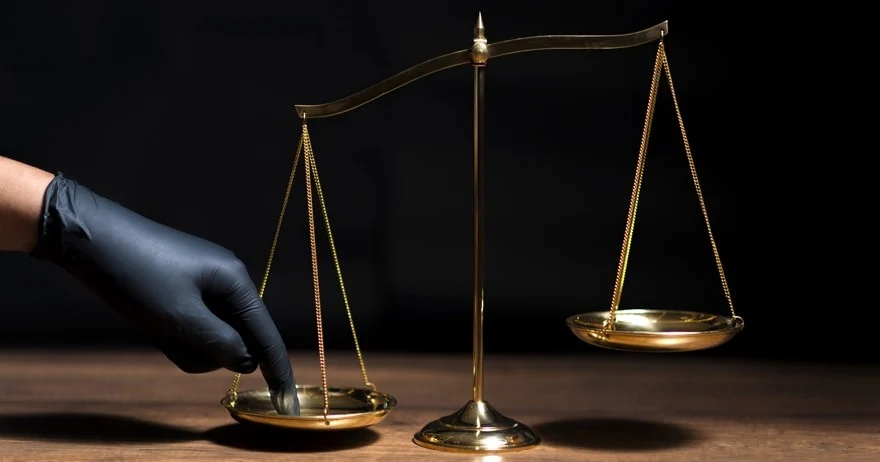
Reparations are a program of acknowledgement, redress and closure for a grievous injustice. Where American Freedmen are concerned, the grievous injustices that make the case for reparations include slavery, legal segregation (Jim Crow), and ongoing discrimination and stigmatization.
How much does America owe the American Freedmen?
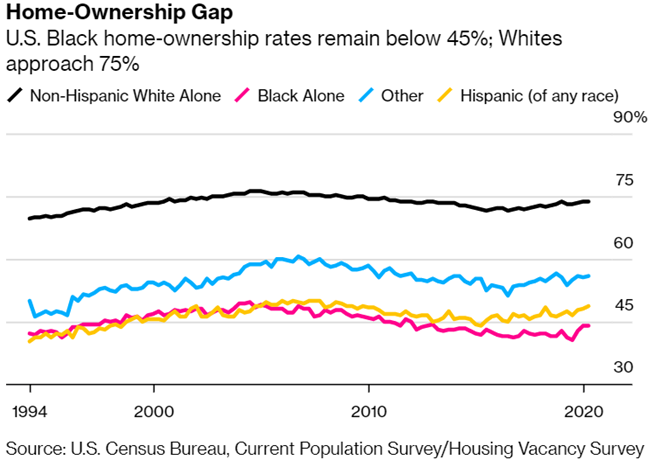
No monetary figure can fully measure the harms American Freedmen have endured. Nevertheless, comparing two federal actions—the Homestead Act of 1862 and General William T. Sherman's Special Field Orders No. 15 of 1865—reveals sharply different paths to landownership and the accumulation of wealth.
The promise associated with '40 acres and a mule' was never fulfilled on a national scale. Under President Andrew Johnson, much of the land allocated to freed families under Sherman's order was returned to former owners. This reversal denied those families an opportunity to establish an economic foundation after emancipation and to pass land and wealth to later generations.
In contrast, the federal homesteading system ultimately distributed approximately 270 million acres. Although some people labeled 'Black' in America also secured homesteads, their participation did not remedy the failure to provide land broadly to emancipated families. The contrast illustrates the lasting importance of federal policy in creating opportunities to acquire and transmit wealth.
Dr. Martin Luther King Jr. explained how federal land policy helped white Americans build an economic foundation:
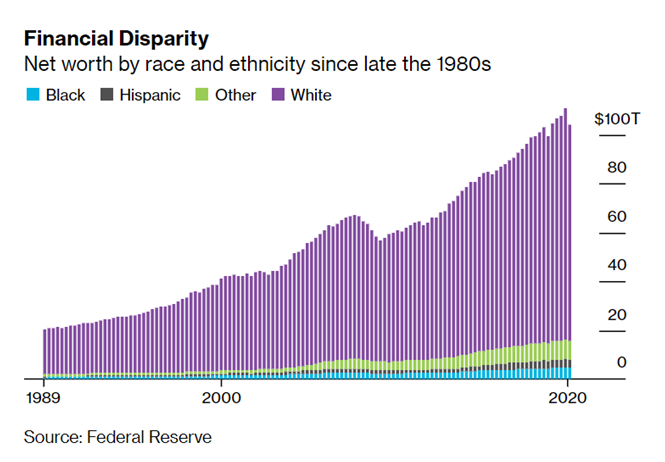
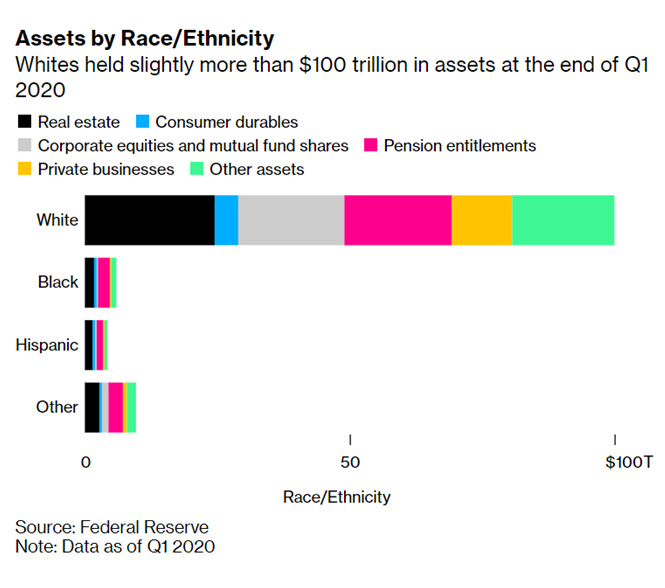
Economist William A. Darity Jr. identifies closing the Black–white wealth gap as a central financial objective of reparations for American Freedmen—the descendants of people enslaved in the United States. Research he coauthored using the Federal Reserve's 2022 Survey of Consumer Finances places the difference in average Black and white household net worth at approximately $1.15 million. His national reparations estimate, reported in June 2026, is $16 trillion. Distributed equally among an estimated 40 million eligible recipients, that would amount to approximately $400,000 per person. (Duke University; Forbes)
We propose distributing this individual allocation over ten years through direct payments of $40,000 annually—approximately $3,333.33 monthly, $1,538.46 every two weeks, or $769.23 weekly. These payments would directly support the accumulation of household wealth. To achieve the objective of closing the mean wealth gap, the program's funding and payment schedule should account for inflation and changes in the wealth gap during implementation.
Are Reparations Only About Money?
Direct payments are an essential part of a complete reparations package. The package must also address the educational, economic, institutional, and other harms produced by slavery and its aftermath. Funding for those measures should be distinguished from the amount allocated to individual recipients. A complete program combines payments, policies, and protections to repair accumulated harms and prevent their continuation.
Who is eligible?
With "slaves" and "slavery" being such broad and inclusive terms, we concluded that the legal status term applied to our emancipated ancestors — "Freedmen" — would not only be a better identifier, but a perfect way to disaggregate the people called "Black" in America. There is no ambiguity attached to a name embedded in the historical records and legislation of the United States. From the Freedmen's Bureau to the Freedmen's Savings Bank, this name clears up any confusion insofar as "who should get it" is concerned.
Whites whose ancestors may have been indentured servants did not suffer the same fate as those labeled "Negroes" — the Freedmen — after slavery was legally ended. Eligibility for this proposed program rests solely on Freedmen status. A racial label, nationality, or immigration history does not by itself establish that status.
Freedmen Status and Eligibility
An earlier version of the Office of Management and Budget's Statistical Policy Directive No. 15 stated with regard to racial classifications: "These classifications should not be interpreted as being scientific or anthropological in nature, nor should they be viewed as determinants of eligibility for participation in any Federal program." The United Sons and Daughters of Freedmen hold that Freedmen status shall be the sole eligibility requirement for reparations.
Will Reparations Blow Up the National Debt?
The federal government has the capacity to finance a reparations program on a national scale. Its fiscal powers differ fundamentally from those of households, states, and municipalities. Financing reparations does not necessarily require a matching increase in taxes. The effect on federal debt, however, depends on the financing mechanism Congress adopts. A responsible program must also account for inflation, productive capacity, and the timing of payments.
The United States has previously provided compensation and redress to Indian nations and to eligible Japanese American survivors of wartime incarceration. These programs arose under different laws and at different times.
For a fuller discussion of financing reparations, read Reparations, but how will we pay for it?
Conclusion
A complete reparations program is necessary to repair the accumulated harms inflicted on American Freedmen and secure the material foundations of liberty and opportunity. The nation's wealth was built in substantial part through the uncompensated labor of their enslaved ancestors, while emancipation left many freed families without land or adequate resources.
A 2017 report, The Road to Zero Wealth, projected that median wealth among households labeled 'Black' could reach zero by 2053 if the historical trends examined in the report continued. That conditional projection underscores the urgency of repair; it does not establish that a majority of American Freedmen will become homeless.
The direct reparations payment portion of a complete package must help American Freedmen build lasting household wealth. Policies and protections must support that repair and prevent its erosion.
Reparations means payments, policies, and protections.
Suggested Reading Materials
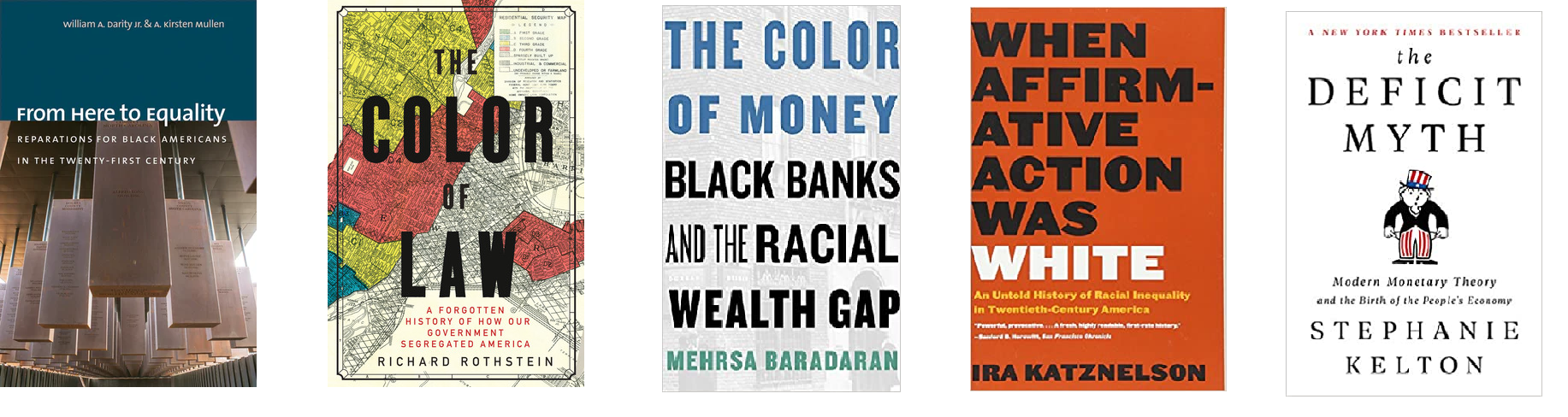
- From Here to Equality: Reparations for Black Americans in the Twenty-First Century — A. Kirsten Mullen and William A. Darity Jr.
- The Color of Law: A Forgotten History of How Our Government Segregated America — Richard Rothstein
- The Color of Money: Black Banks and the Racial Wealth Gap — Mehrsa Baradaran
- When Affirmative Action Was White: An Untold History of Racial Inequality in Twentieth-Century America — Ira Katznelson
- The Deficit Myth: Modern Monetary Theory and the Birth of the People's Economy — Stephanie Kelton